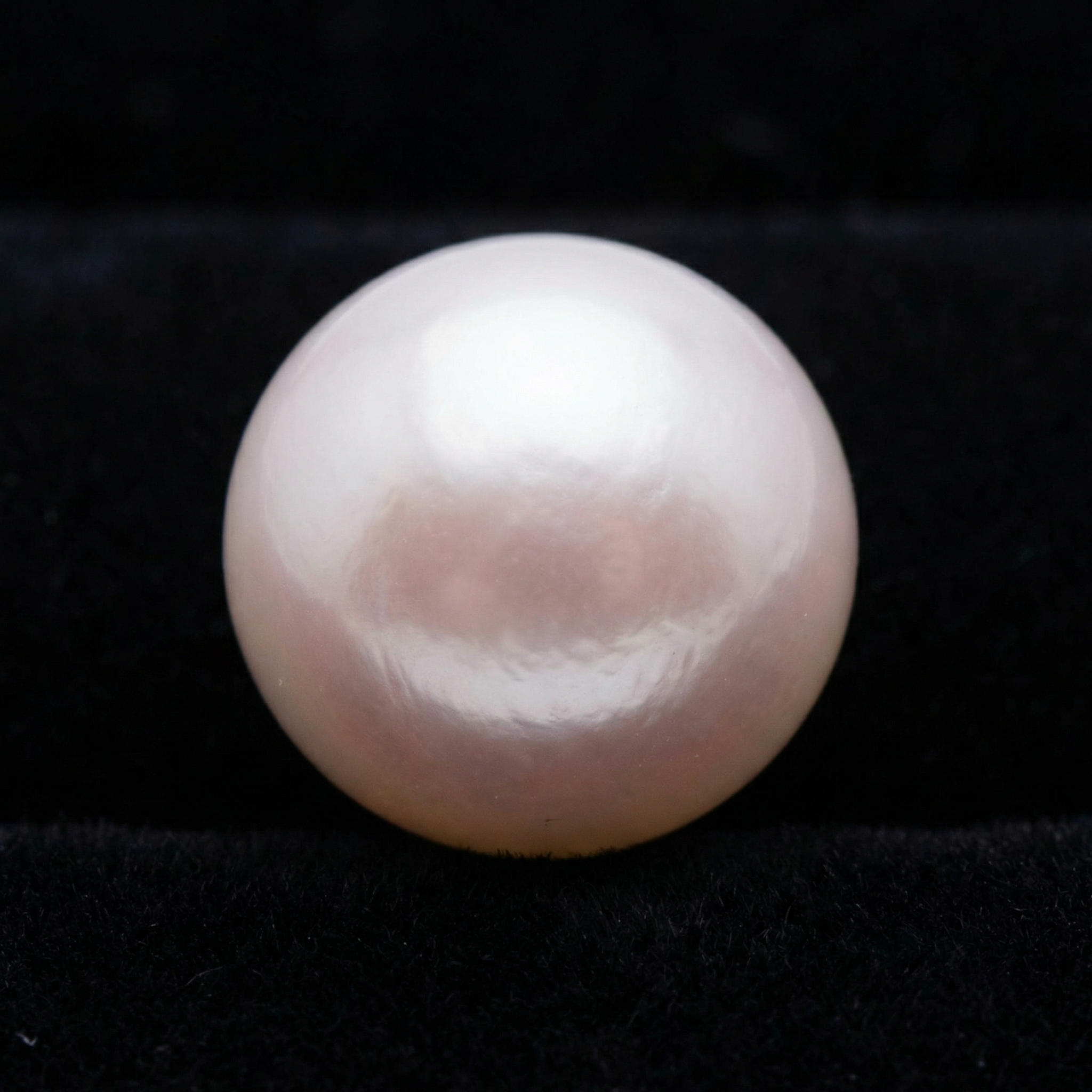
Pearl (Organic Gem)
Pearl is an ancient organic gemstone produced by mollusks, primarily oysters and mussels. It is highly prized for its unique warm luster and elegant temperament, symbolizing health, purity, wealth, and happiness. Since ancient times, pearls have been used as jewelry and ornaments around the world, carrying profound historical and cultural significance.
Mohs Hardness
2.5-4.5
Origin
China, Japan, French Polynesia, Australia, Indonesia
Market Price Range
Commercial Freshwater Pearls: $7 - $45/piece; High-Quality Freshwater Pearls: $70 - $300/piece; Japanese Akoya Pearls: $200 - $1,500/pearl; South Sea/Tahitian Pearls: $450 - $7,500+/pearl
Detailed Description
Identification Methods
Observe the surface: Real pearls have natural growth textures and are not perfectly smooth, while imitations have an overly smooth or coated feel.
Tooth test: Gently rub against a tooth; real pearls feel gritty or sandy, while imitations feel smooth.
Touch and temperature: Real pearls feel cool to the touch, while imitations adapt to the ambient temperature.
Examine the drill hole: The edges of a real pearl's drill hole are sharp and clean, whereas imitations may show signs of a peeling coating or rough edges.
Compare the luster: The luster of a real pearl has depth and layers, appearing to emanate from within, while the luster of an imitation is often superficial.
Market Information
In recent years, the pearl market has experienced significant growth, especially favored by younger consumers. Although the market has seen some correction after the price peak in 2023, the prices for high-quality, rare pearls (such as large South Sea pearls and Japanese Akoya pearls) remain firm. The demand for fashionable and unique designs continues to drive market innovation, making pearls a hot category in the jewelry market with both investment and aesthetic value.
Classification
Organic Gemstone (Calcium Carbonate)
Curated selections with appraisal guarantee