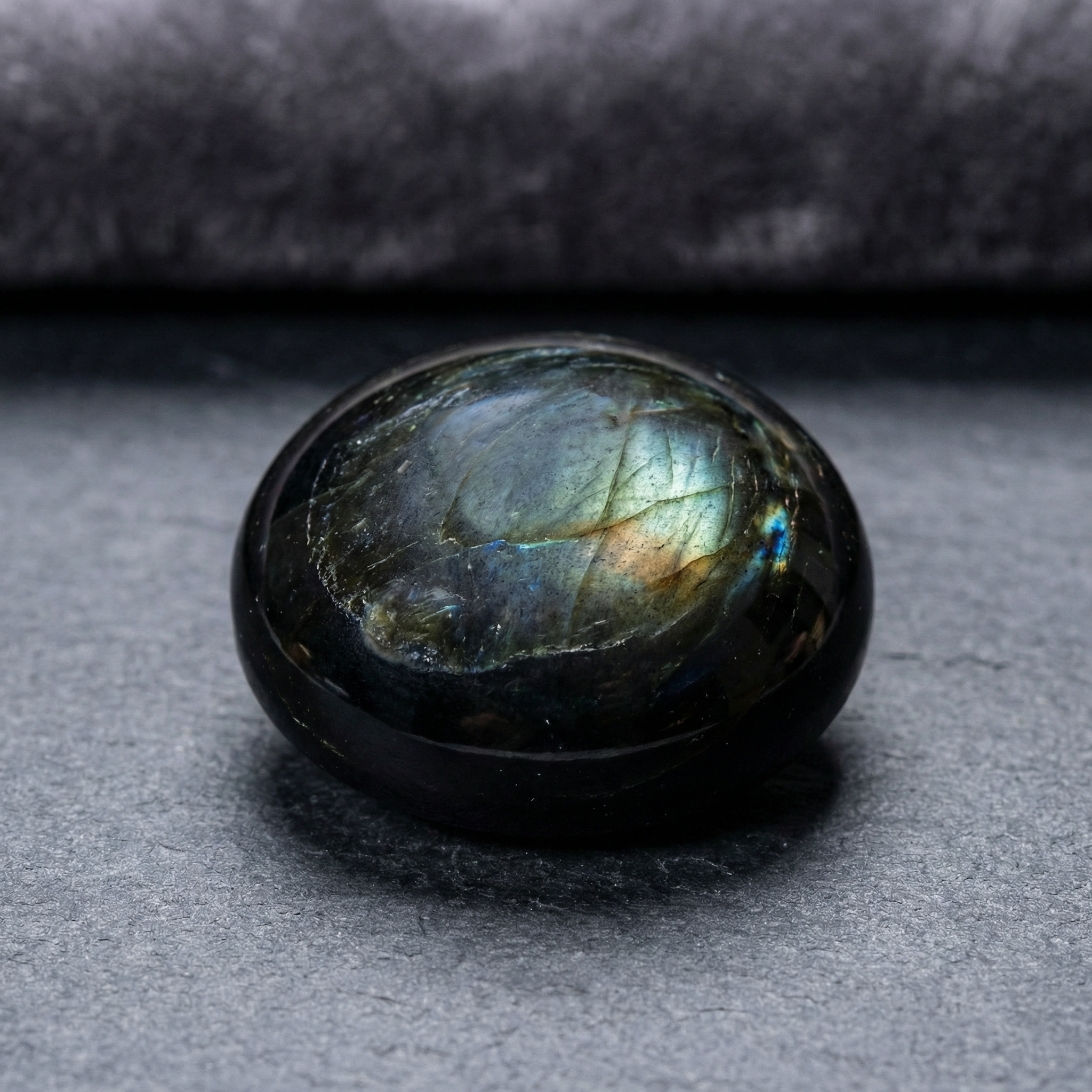
Obsidian (Volcanic Glass)
Obsidian is a natural glass formed from the rapid cooling of volcanic lava, prized for its deep black color and vitreous luster. Since ancient times, it has not only been used for weapons and tools due to its sharp fractures but has also been endowed with mystical symbolism in various cultures, often used as a protective amulet and a ritual tool. Its unique formation process and long history make it a special link between geology and human civilization.
Mohs Hardness
5.0-6.5
Origin
Mexico, USA, Japan, Iceland, China
Market Price Range
Low Grade (common black): $2-$5 per piece or sold by weight ($5-$10 per kg for rough).||Mid Grade (e.g., snowflake, common rainbow): $10-$50 per piece.||High Grade (e.g., high-quality rainbow, gold/silver sheen): $50 to over $200 per piece, depending on size and quality.
Detailed Description
Identification Methods
Color under light: Genuine obsidian shows deep brown or gray when held against a strong light source, while imitations are often uniformly black.
Internal features: Natural obsidian often contains flow lines or tiny bubbles, visible under magnification.
Rainbow sheen: Rainbow obsidian displays a unique, difficult-to-imitate iridescent sheen under strong light.
Thermal conductivity: Being a natural glass, obsidian feels cooler to the touch than synthetic glass imitations.
Fracture pattern: Obsidian exhibits a characteristic conchoidal fracture, which is smooth and curved like the inside of a seashell.
Market Information
The obsidian market is relatively stable, with prices accessible to a wide range of consumers. Common black obsidian is very affordable, often sold by weight as rough stones or as inexpensive polished items. Varieties like rainbow, gold, and snowflake obsidian command higher prices due to their aesthetic appeal. High-quality, artistically carved pieces or large spheres with exceptional color can be quite valuable to collectors. The market is driven more by decorative and spiritual use rather than investment, but unique and rare specimens hold good value.
Classification
Volcanic Glass (Amorphous)
Curated selections with appraisal guarantee