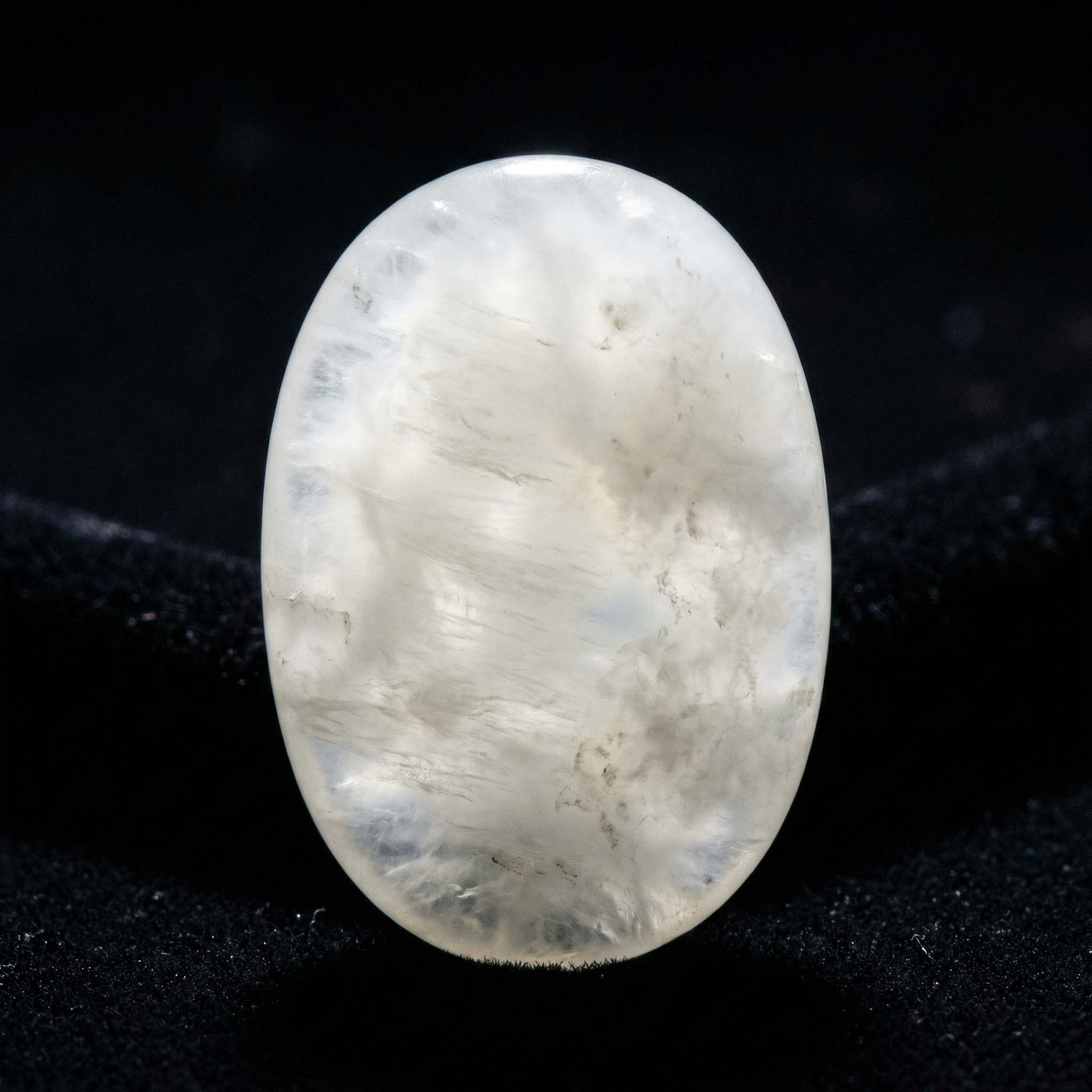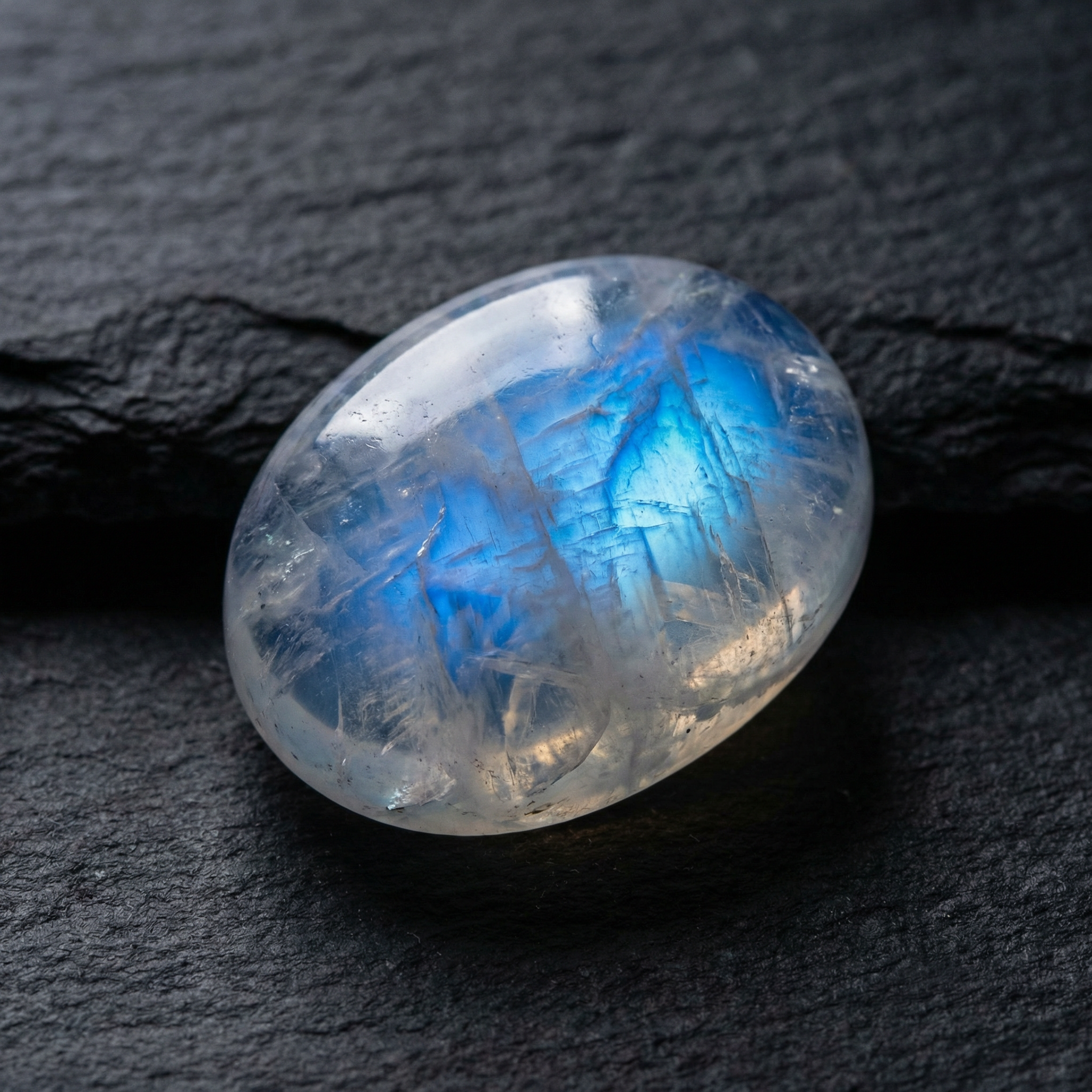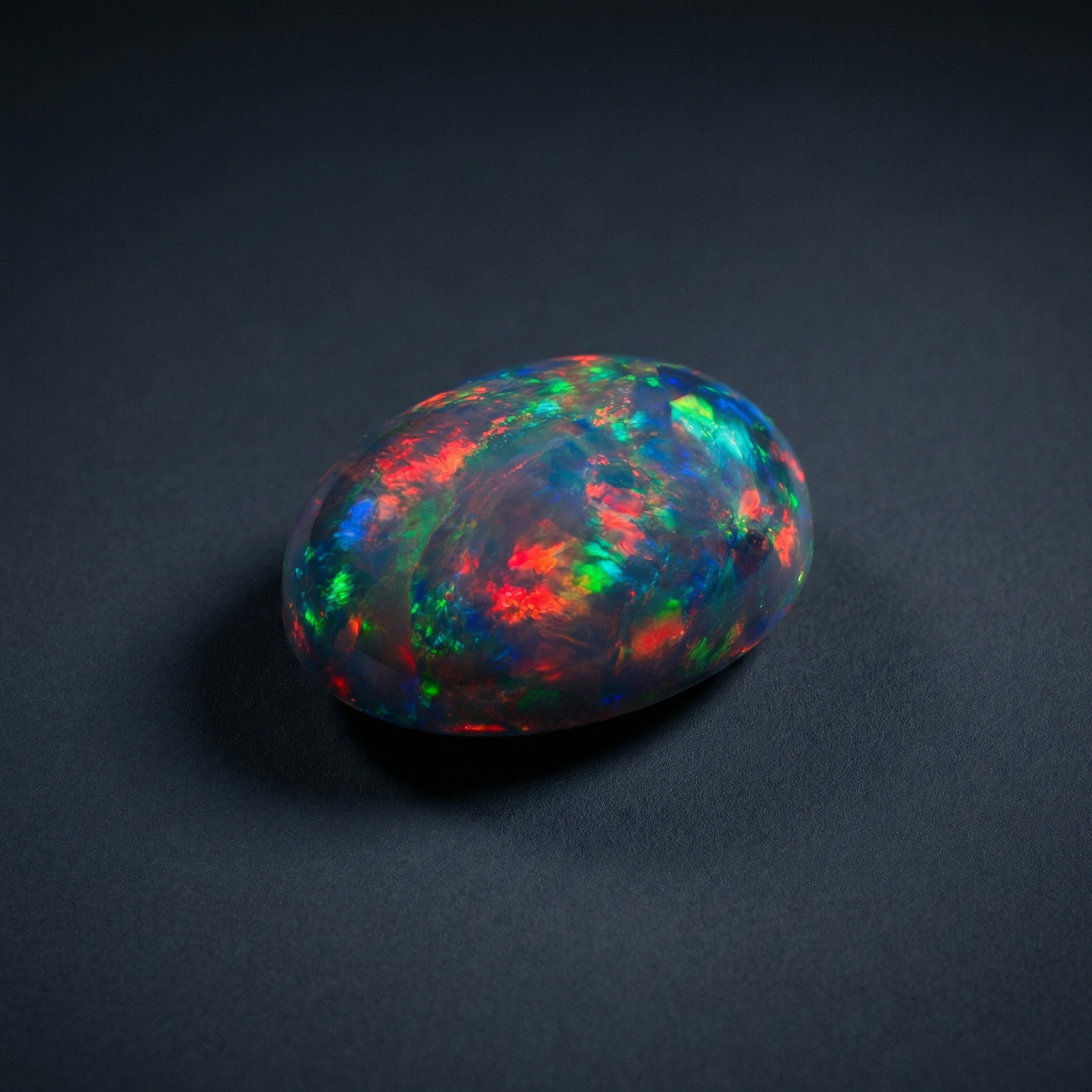
Opal (Hydrated Amorphous Silica)
Opal is a gem of kaleidoscopic beauty, renowned for its unique play-of-color that flashes a spectrum of rainbow hues. Composed of hydrated silica, its structure diffracts light to create this mesmerizing effect. Historically treasured by Romans as the most powerful gem and believed by Bedouins to contain lightning, opal is the birthstone for October, symbolizing hope, purity, and truth. Its diverse varieties range from the dark, precious black opals of Australia to the fiery opals of Mexico.
Mohs Hardness
5.0-6.5
Origin
Australia, Ethiopia, Mexico, Brazil, Indonesia
Market Price Range
Commercial Quality (e.g., White Opal): $15 - $70 per carat.||Mid-Range Quality (e.g., Crystal Opal, good quality Fire Opal): $70 - $700 per carat.||Top Gem Quality (e.g., Fine Black Opal with strong play-of-color): $700 - $30,000+ per carat.
Detailed Description
Identification Methods
Observe the play-of-color: Natural opal's colors shift and flow with depth and a three-dimensional quality as the stone is rotated.
Examine the structure: Natural opals often have growth lines or host rock (matrix), whereas imitations like glass are often too perfect or may contain gas bubbles.
Check the weight: Opals are relatively light for their size; they feel lighter than glass imitations.
Be cautious with hardness tests: Due to its low Mohs hardness, scratching is not recommended as it can easily damage the stone.
Test for hydrophane properties: Some opals, particularly from Ethiopia, are hydrophane, meaning they absorb water and can become transparent when soaked, reverting to their original appearance upon drying.
Market Information
The opal market is diverse, with prices heavily influenced by type, origin, and quality. Australian black opals command the highest prices, often reaching thousands of dollars per carat for top-tier specimens. Ethiopian opals offer a more affordable yet vibrant alternative, though their market value can be affected by their hydrophane nature and treatment prevalence. Mexican fire opals are prized for their vivid body color. The market has seen stable demand, especially for high-quality, untreated stones, which are increasingly sought after by collectors and investors as a tangible asset.
Classification
Hydrated Amorphous Silica
Curated selections with appraisal guarantee