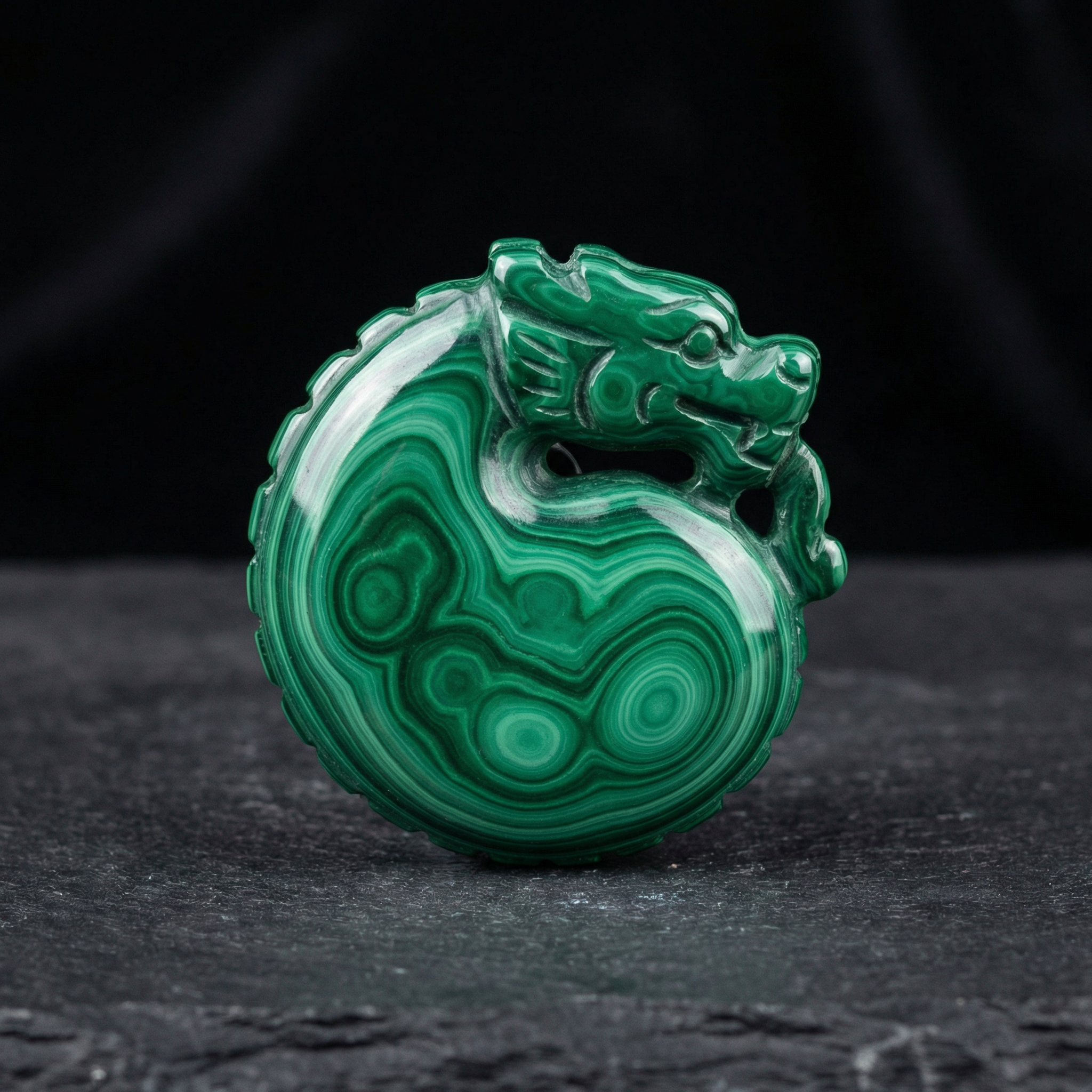
Malachite
Malachite is renowned for its vibrant green color and unique banded patterns, resembling the feathers of a peacock. It is an ancient gemstone, used as jewelry and amulets in ancient Egypt. In China, it is favored for its bright colors and unique textures, often used in crafts and decorations, symbolizing good luck and wealth.
Mohs Hardness
3.5-4.0
Origin
Democratic Republic of Congo, Zambia, Namibia, Russia, Australia
Market Price Range
Commercial grade: $3-$7/carat; Medium quality: $7-$20/carat; High quality (clear patterns, vibrant color): $20-$70/carat; Collector's grade (e.g., 'eye' patterns): higher prices, priced per piece.
Detailed Description
Identification Methods
Observe color and banding: Natural malachite has a vibrant green to dark green color with natural, flowing bands and rich color variations.
Test hardness: Malachite has a low hardness and can be easily scratched with a knife or glass.
Acid reaction: A drop of dilute hydrochloric acid on an inconspicuous spot will cause vigorous bubbling due to its main component, copper carbonate.
Observe luster: Malachite has a vitreous to adamantine luster, while fibrous varieties have a silky luster.
Density: Malachite has a relatively high density, feeling heavy in the hand.
Market Information
In recent years, with the growing interest in colored gemstones, the market demand for malachite has steadily increased. Its unique texture and vintage hue are beloved by designers and consumers. High-quality malachite, especially those with clear 'eye' patterns or landscape-like textures, continues to rise in price, showing good collection and investment potential. However, the market is also flooded with a large amount of treated or synthetic malachite, so careful identification is necessary when purchasing.
Classification
Carbonate Mineral (Basic Copper Carbonate)
Curated selections with appraisal guarantee