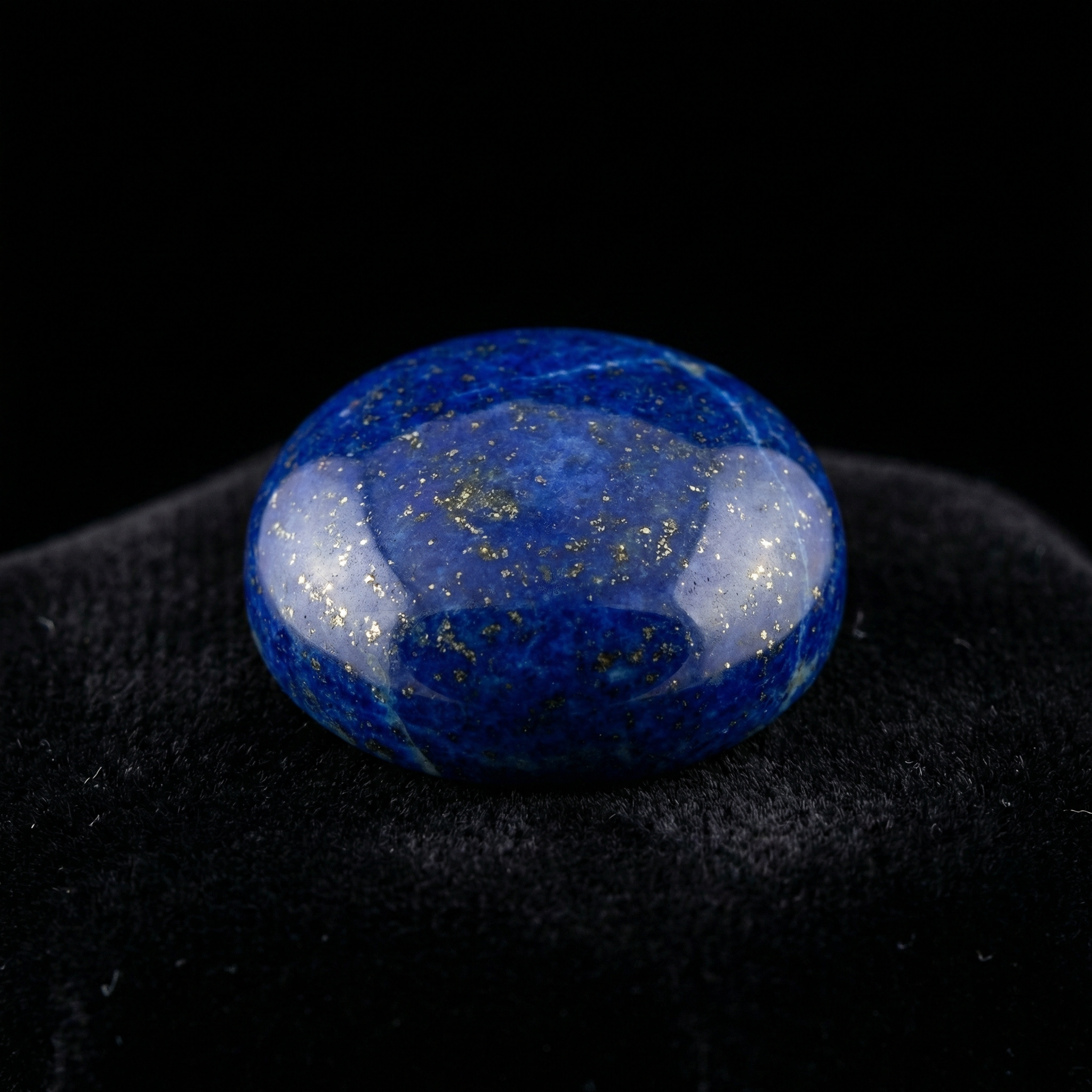
Lapis Lazuli (Lazurite-bearing rock)
Lapis Lazuli is an ancient gemstone cherished for its intense, celestial blue color, often speckled with golden pyrite inclusions. For millennia, it has been a symbol of royalty, wisdom, and truth across various cultures, from ancient Egypt to the Renaissance, where it was ground into the precious pigment ultramarine. Its deep color and historical significance make it a prized material in jewelry and ornamental art.
Mohs Hardness
5.0-5.5
Origin
Afghanistan, Russia, Chile, Myanmar, USA
Market Price Range
Commercial Grade: $1-5 per carat. Mid Grade (good color, some calcite): $5-20 per carat. High Grade (intense blue, minimal calcite): $20-100+ per carat. Finished jewelry pieces can range from $50 to several thousand dollars depending on quality and craftsmanship.
Detailed Description
Identification Methods
Color Check: Genuine Lapis has a deep, intense blue, often with violet or greenish tints, not a flat, uniform artificial blue.
Pyrite & Calcite Check: Look for naturally scattered, metallic golden specks (Pyrite) and white streaks (Calcite). Fakes often have too uniform or unnaturally glittery specks.
Hardness Test: With a Mohs hardness of 5-5.5, it can be scratched by harder materials like quartz but should not be easily scratched by a knife.
Acetone Test: Dab a cotton swab with acetone and rub a small area. Dyed stones will often bleed color onto the swab.
Specific Gravity: It has a specific gravity of 2.7 to 2.9, which is denser than many imitations like dyed Sodalite or plastic.
Market Information
The market for Lapis Lazuli remains strong, driven by demand in both jewelry and collectibles. Prices in 2024-2026 reflect a premium for high-quality, untreated stones from Afghanistan, which exhibit a deep royal blue with fine pyrite dusting. Commercial-grade material is more affordable and widely used. The market sees a stable interest from consumers who value its rich history and unique aesthetic, ensuring its continued relevance in the gemstone world.
Classification
Rock (Aggregate mainly composed of Lazurite)
Curated selections with appraisal guarantee