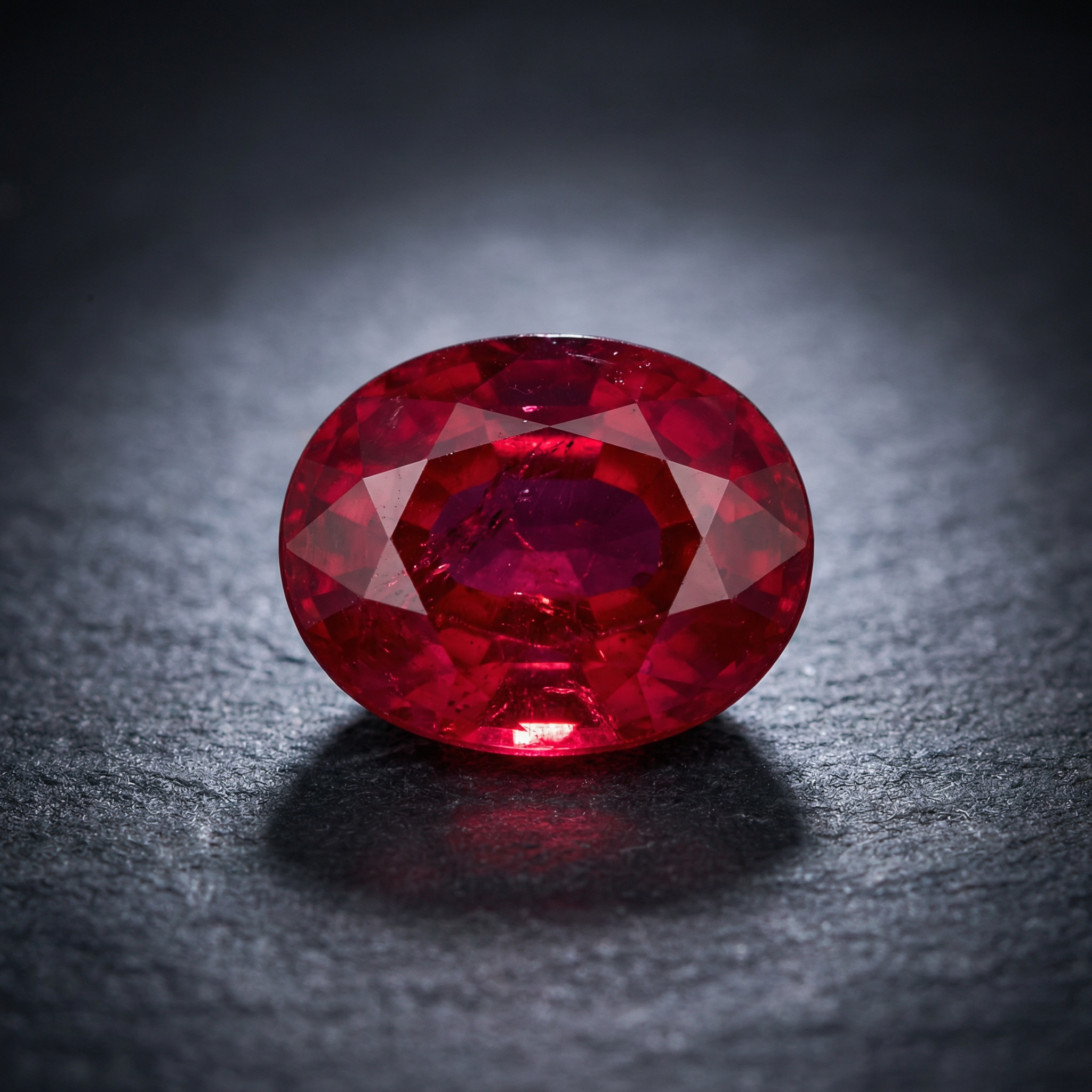
Ruby (Corundum)
Renowned for its fiery red allure and title as the "king of gems," ruby is the birthstone for July, symbolizing passion, love, and vitality. For millennia, it has been a symbol of power and wealth across various cultures, often adorning royal jewelry. Its unique fluorescence and high hardness make it a prized choice for jewelry collectors and enthusiasts.
Mohs Hardness
9.0
Origin
Myanmar, Mozambique, Thailand, Sri Lanka, Tanzania
Market Price Range
Commercial grade: $100 - $500 per carat; Fine quality: $1,000 - $15,000 per carat; Top quality (e.g., "Pigeon's Blood"): $20,000 - $150,000+ per carat
Detailed Description
Identification Methods
Color Observation: Natural rubies often have uneven color distribution and growth textures, whereas synthetics appear too uniform.
Internal Inclusions: Under 10x magnification, natural rubies frequently contain silk-like, acicular "silk" inclusions or fingerprint-like healed fractures.
Fluorescence Reaction: Under long-wave UV light, natural rubies typically exhibit moderate to strong red fluorescence, while some synthetics or treated stones may react differently.
Pleochroism: Viewing from different angles reveals pleochroism of red and orangey-red, a typical characteristic of corundum.
Professional Certification: For high-value rubies, it is recommended to submit them to a reputable gemological laboratory (e.g., GIA) for precise origin and treatment information.
Market Information
The ruby market remains robust, especially for high-quality, unheated natural rubies. Mogok in Myanmar and Mozambique are the primary sources for top-tier rubies, with their "Pigeon's Blood" variety being highly sought after, frequently setting new price records. As demand from emerging markets grows and resources become scarcer, the investment value and collection potential of rubies continue to increase. Consumers should focus on factors like color, clarity, carat weight, and origin when purchasing.
Classification
Corundum (Aluminum Oxide)
Curated selections with appraisal guarantee