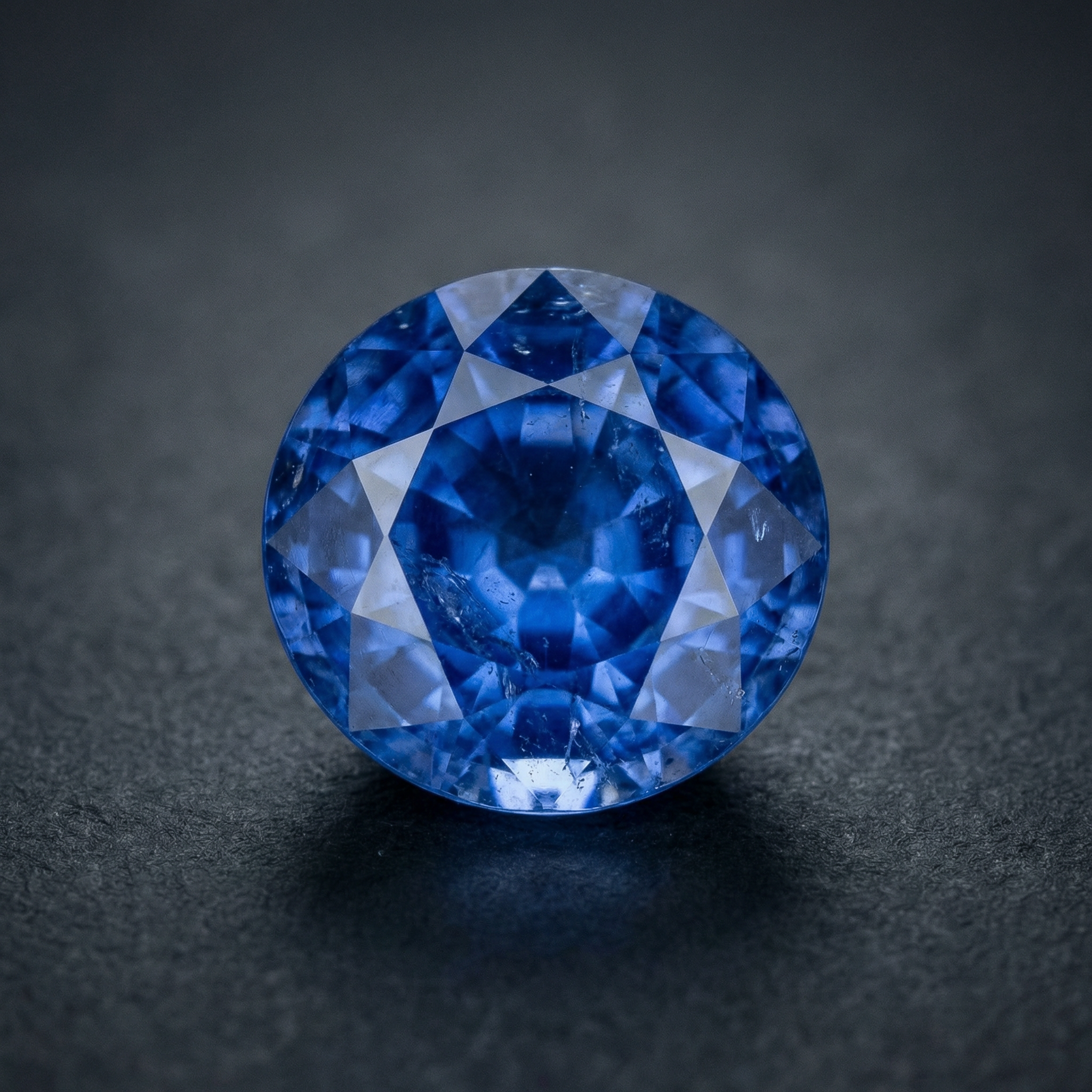
Sapphire (Corundum)
Sapphire, a precious variety of the mineral corundum, is treasured for its magnificent blue hues, symbolizing wisdom, royalty, and divine favor. As one of the four cardinal gemstones, its history dates back to ancient civilizations, where it was believed to protect its owner from harm and envy. Its durability and brilliance make it a timeless choice for fine jewelry, representing faithfulness and sincerity.
Mohs Hardness
9
Origin
Sri Lanka, Myanmar, Kashmir, Thailand, Australia, Madagascar
Market Price Range
Entry-level (under 1 ct, heated): $50 - $500/carat. Commercial-grade (1-3 ct, heated): $500 - $2,000/carat. High-quality (3-5 ct, unheated/minor heat): $3,000 - $20,000/carat. Collector's grade (5+ ct, top origin, unheated): $20,000 - $200,000+/carat.
Detailed Description
Identification Methods
Hardness Test: With a Mohs hardness of 9, second only to diamond, it can easily scratch glass and most metals.
Internal Features: Natural sapphires often exhibit straight, angular color banding and growth lines. Tiny mineral inclusions, like rutile needles creating a 'silk' effect, are common.
Color Distribution: The color in natural stones is often uneven, showing distinct zones of lighter and darker blue parallel to the crystal faces.
Breath Test: Due to its high thermal conductivity, when you breathe on a natural sapphire, the fog will dissipate very quickly.
Professional Examination: Use professional gemological tools like a refractometer and spectroscope to verify its physical and optical properties for a conclusive identification.
Market Information
The sapphire market remains robust, particularly for high-quality, untreated stones from renowned origins like Kashmir, Myanmar, and Sri Lanka, which continue to see steady price appreciation. The value of these top-tier gems is driven by their rarity and collector demand. The commercial-grade market is more stable, while demand for lower-end, smaller stones can fluctuate. Investment-grade sapphires are typically those over 3 carats, with exceptional color and clarity, and no heat treatment.
Classification
Corundum (Aluminum Oxide)
Curated selections with appraisal guarantee