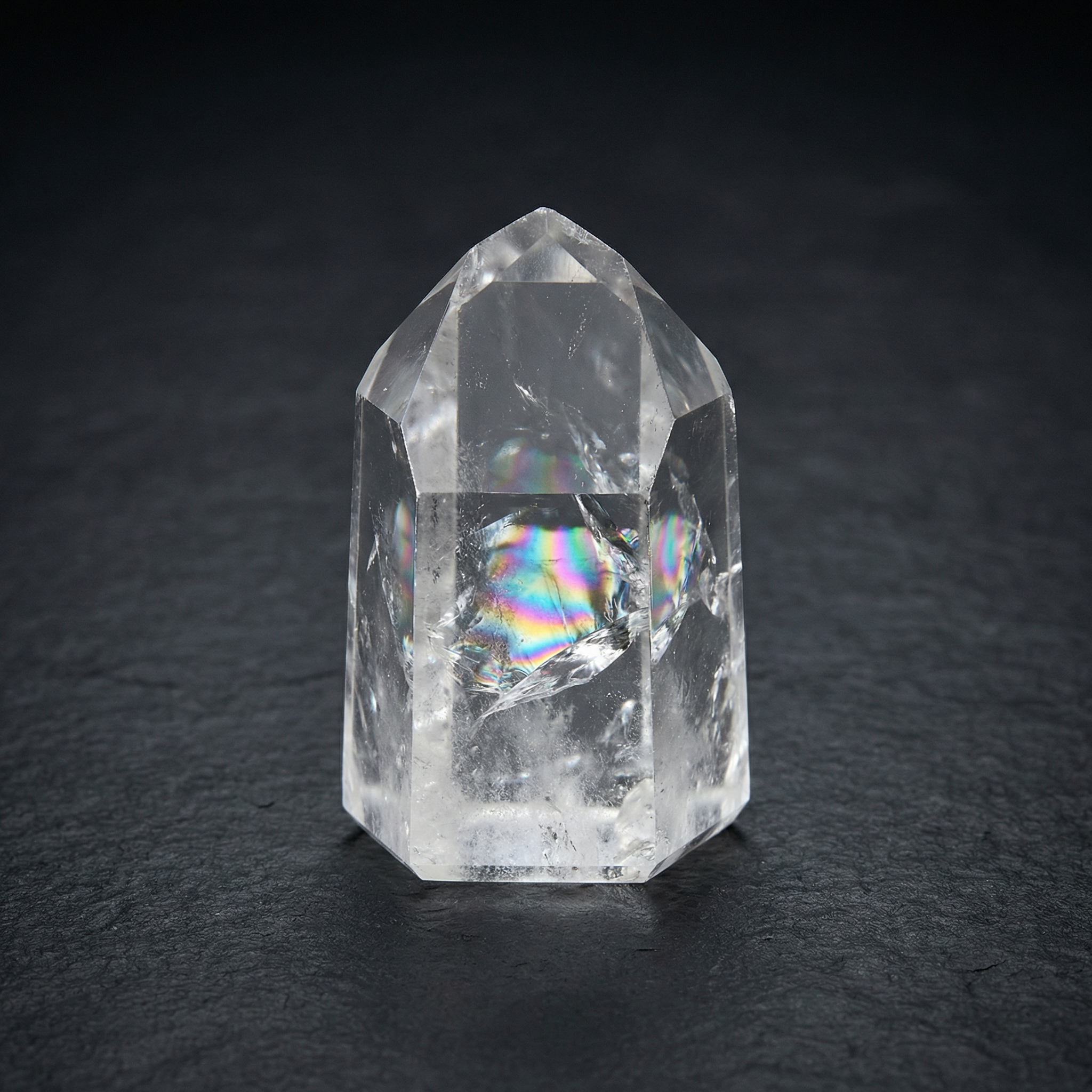
Crystal (Quartz)
Crystal is the colorless and transparent crystalline form of Quartz, with its main chemical component being silicon dioxide (SiO2). Since ancient times, it has been regarded as a treasure for its crystal-clear and flawless quality, widely used in making jewelry, ornaments, and sacred objects. In many cultures, crystal is considered a symbol of purity, energy, and healing, endowed with mystical powers to store memories and amplify intentions.
Mohs Hardness
7.0
Origin
Brazil, Uruguay, China, Madagascar, USA
Market Price Range
Standard Grade: $5-$50 per piece; Jewelry Grade: $1.5-$7 per gram; Collector's Grade (high purity, large size): $15-$70+ per gram.
Detailed Description
Identification Methods
Hardness Test: With a Mohs hardness of 7, it can scratch glass.
Inclusion Observation: Natural crystal often contains inclusions like clouds or cracks, whereas glass imitations are typically flawless.
Thermal Conductivity: Natural crystal feels cool to the touch and has a higher density than glass.
Double Refraction: When viewing a single line through the crystal, a double image should be visible due to its birefringence.
Fracture: It exhibits a conchoidal fracture, a smooth, curved break pattern, unlike the flat or irregular breaks of many imitations.
Market Information
The market for crystal is diverse, ranging from affordable tumbled stones to high-end collector's specimens and jewelry. Its value is primarily determined by clarity, size, color (for colored varieties), and overall quality. While common rock crystal is abundant and relatively inexpensive, rare varieties or those with unique inclusions can command high prices. The demand for crystal in both the wellness and electronics industries ensures its stable market position. As of 2024-2026, prices remain accessible for most grades, but exceptional pieces continue to appreciate in value.
Classification
Quartz (Silicon Dioxide)
Curated selections with appraisal guarantee