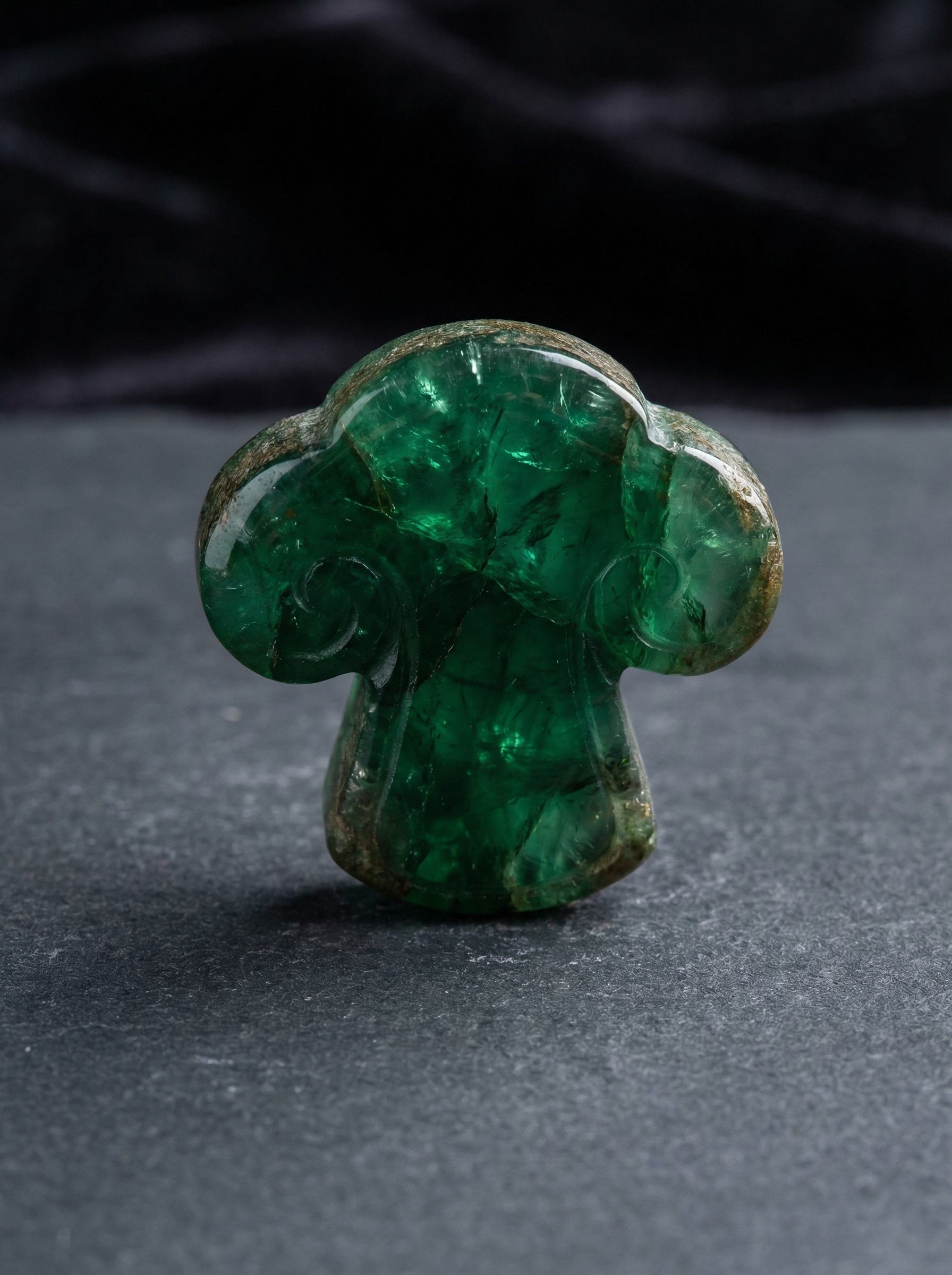
Emerald (Beryl)
Emerald, a prized variety of the mineral beryl, is celebrated for its stunning deep green color, caused by traces of chromium and vanadium. Revered since antiquity, it symbolizes rebirth, love, and security, making it one of the most coveted gemstones. Its unique inclusions, known as 'jardin', add to its character, making each stone one-of-a-kind.
Mohs Hardness
7.5-8.0
Origin
Colombia, Zambia, Brazil, Afghanistan, Russia
Market Price Range
Commercial Grade: $200 - $1,500 per carat. Fine Quality: $1,500 - $8,000 per carat. Extra Fine Quality (Rare): $8,000 - $30,000+ per carat.
Detailed Description
Identification Methods
Color Check: Look for a deep, vivid green, not too light or yellowish. Natural emeralds have a rich, distinct hue.
Check for Inclusions: Most natural emeralds have visible inclusions (the 'jardin'). A completely flawless stone is extremely rare and may be synthetic.
Refractive Index: Use a refractometer; emerald's RI is typically around 1.577–1.583.
Hardness Test: With a hardness of 7.5-8, it should not be easily scratched by materials with lower hardness like quartz (7).
Magnification: Under a loupe, observe the nature of inclusions. Natural ones are often irregular, while synthetic ones can appear more uniform or bubble-like.
Market Information
The emerald market remains robust, especially for high-quality stones from Colombia and Zambia. Prices for untreated, top-grade emeralds continue to appreciate steadily due to their rarity. The market shows a growing demand for ethically sourced gems, influencing supply chains. While the mid-to-low quality market faces price fluctuations, investment-grade emeralds are considered a stable asset, with their value projected to hold strong through 2026.
Classification
Beryl (Cyclosilicate)
Curated selections with appraisal guarantee