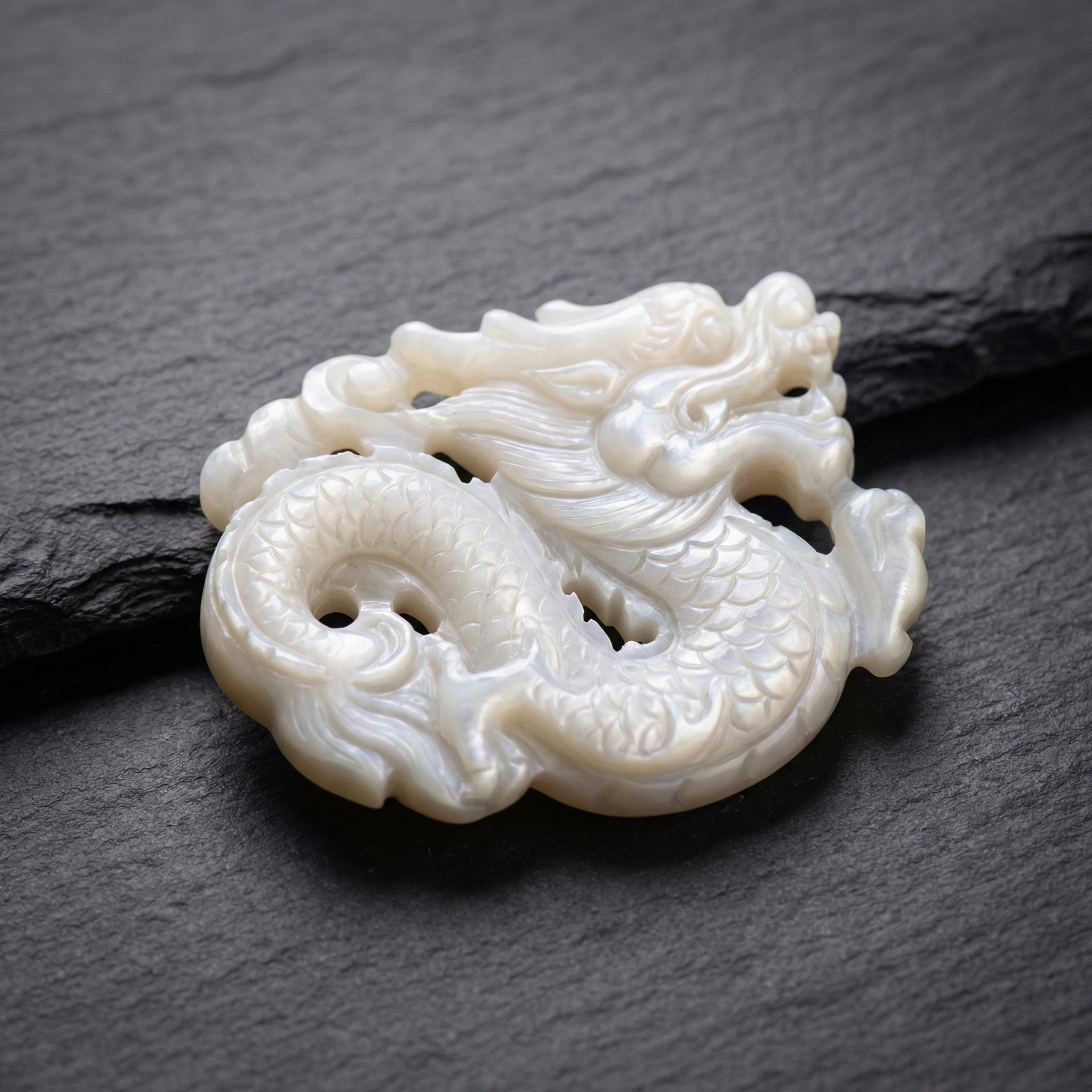
Giant Clam (Tridacna)
Tridacna, also known as giant clam, is the largest marine bivalve mollusk and is considered one of the Seven Treasures in Buddhism. Its shell, revered for its pure white color and iridescence, has been used for centuries in jewelry and carvings. Valued for its organic origin and spiritual significance, Tridacna symbolizes purity, peace, and protection, holding a distinguished place in both natural history and cultural heritage.
Mohs Hardness
2.5-4.0
Origin
South China Sea (Xisha Islands, Hainan, Taiwan), Philippines, Indonesia, Australia
Market Price Range
Due to trade restrictions, prices are for legally sourced antique or pre-ban items. Standard quality (e.g., beads, small pendants): $50 - $300. Gem-quality ('jade-like'): $500 - $5,000+. Rare golden or red varieties can fetch over $10,000.
Detailed Description
Identification Methods
Observe the growth lines: Authentic Tridacna has natural, layered growth rings that are visible under magnification.
Check the color: The color is typically pure white. 'Jade-like' varieties are translucent, while golden Tridacna has distinct yellow/gold patterns.
Test the density: It has a specific gravity of around 2.70, feeling substantial in hand, but it is lighter than common imitations like glass or marble.
Verify the hardness: With a Mohs hardness of 2.5-4.0, it can be scratched by a knife, which distinguishes it from harder imitations like quartzite.
Examine the structure: When illuminated, the shell's natural layered structure can often be observed.
Market Information
The market for Tridacna is heavily restricted due to its protected status under CITES. Trade in new materials is illegal in many countries, including China. Consequently, the market primarily consists of antique pieces or items from old, pre-ban stock. High-quality 'jade-like' and golden Tridacna command very high prices among collectors. Investors should be extremely cautious, verifying the legality and provenance of any piece, as the market is fraught with forgeries and illegal items.
Classification
Organic Gemstone (Aragonite, Calcium Carbonate)
Curated selections with appraisal guarantee