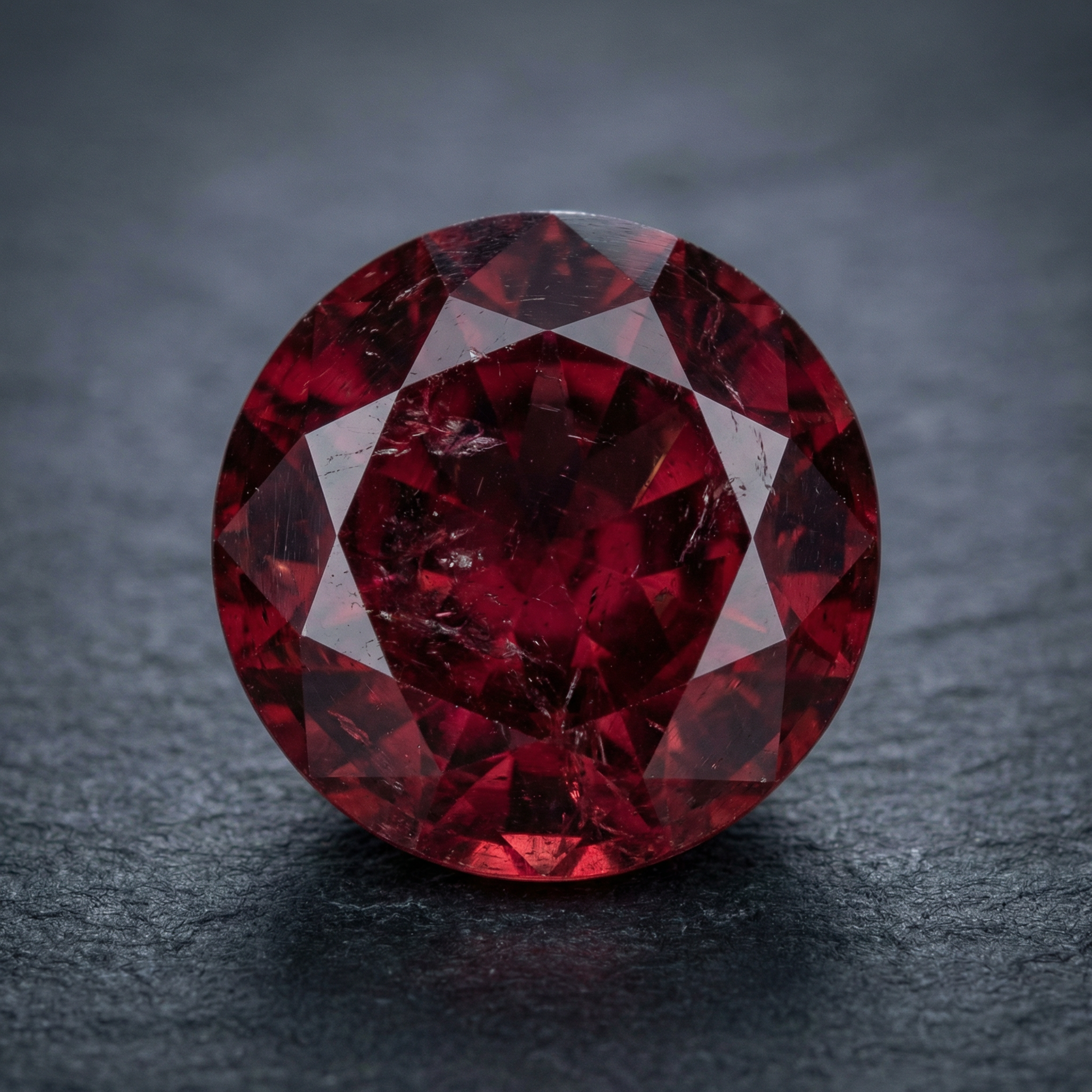
Garnet (Silicate mineral group)
Garnet is a group of silicate minerals with a long history, used as gemstones and abrasives since the Bronze Age. Its crystal form and color are similar to pomegranate seeds, hence the name 'Garnet'. It symbolizes loyalty, friendship, and chastity, and is known as the 'January birthstone,' representing new life, faith, and simplicity. Its rich colors and deep cultural heritage make it highly favored in the jewelry market.
Mohs Hardness
6.5-7.5
Origin
Sri Lanka, Brazil, India, Madagascar, Kenya
Market Price Range
Entry-level: $7-$30/carat; Commercial-grade: $30-$120/carat; Collection-grade: $120-$450+/carat (Rare varieties like Demantoid and Tsavorite are much higher).
Detailed Description
Identification Methods
Observe the color: Natural garnet colors are usually softer and rarely a very vivid red.
Check for inclusions: Under magnification, natural features such as gas-liquid inclusions, or needle-like or columnar crystals are often visible.
Test hardness: With a Mohs hardness of 6.5-7.5, it can scratch glass (hardness around 5.5).
Examine dispersion: Some varieties, like Demantoid, have high dispersion and exhibit 'fire'.
Note the specific gravity: Garnet has a relatively high specific gravity (3.47-4.15), feeling heavier than glass or crystal.
Market Information
The garnet market is broad and stable, catering to different consumer levels from affordable red varieties to expensive green ones. In recent years, with increased consumer awareness of colored gemstones, varieties like Spessartine (Fanta garnet) and Tsavorite have seen rising demand and prices. The market for high-quality, large-carat rare garnets remains strong, showing good potential for appreciation. Overall, garnet is a gemstone with both aesthetic and investment value.
Classification
Silicate Mineral (Nesosilicate)
Curated selections with appraisal guarantee